My 1st Substack piece on the Orange Economy, where I argue that Gen Z should take this seriously!
As you drive south from Chennai towards Coimbatore on the National Highway, you cannot miss the vast campuses of numerous educational institutions on both sides of the highway. Most of these campuses have an engineering college at their core, around which other courses and disciplines have been added over time. In Tamil Nadu alone, according to the latest estimates, there are close to 500 “functional” engineering colleges, including government-aided and private ones. This mushrooming of engineering colleges resulted from the state’s decision in 1984 to allow private, self-financing engineering colleges to be established. By the beginning of this decade, a state with a population of 5.5-5.8% of India’s population accounted for 17% of all engineers graduating in India. If you trip and fall in Tamil Nadu, you will fall on an Engineer!
For Tamil Nadu, the timing of this policy shift of allowing private players in engineering education was almost perfect. By the time these colleges were fully established, they were ready to ride the liberalisation wave unleashed in the country in 1991 by the Narasimha Rao government. Tamil Nadu had a head start as an industrialised state from the 1960s. In the aftermath of liberalisation, foreign manufacturers, particularly in the automotive sector, began setting up local manufacturing plants in and around Chennai. These units required a technically skilled workforce to handle design, supply chain, the shop floor, quality, technical service, training, and related areas, and this demand could be met by engineers graduating from these colleges. Even the brain drain of engineering graduates from Tier 1 institutions, such as IITs and other government-aided colleges, did not create a significant shortage, as demand could be met by graduates from Tier 2 and Tier 3 colleges.
This wave of engineers’ absorption continued for more than two decades, until recently. The launch of the STPI (Software Technology Parks of India) scheme in 1991, and later the software boom triggered by the Y2K phenomenon in the late 90s, brought India to the cusp of becoming a global software development power. Demand for engineers who knew how to write code went through the roof. Even if students didn’t know how to code, companies were willing to hire them and train them after onboarding. The joke then, in the early 2000s, was that IT majors such as Infosys, TCS, Wipro, and the like were recruiting engineers of all hues by the truckload. This was reflected in the preferences of students on campuses as well. Gone were the days when students were eager to get into core engineering streams. Preferences shifted from conventional streams like Mechanical, Civil, and Electrical to IT, as IT jobs were considered to pay more and offered the lure of off-site assignments. Lulled into this comfort zone, policymakers, students, and the management of these institutions never imagined a scenario in which jobs and the frenzy on engineering campuses could dry up one day.
In recent years, due to the global slowdown and, more recently, the threat of AI, companies have reduced their intake of fresh engineers. As we speak, only 40-50% of engineering graduates secure campus placements. In Tier 2/3 colleges, which are mostly private, placement rates range from 20% to 50%. In these colleges, average salaries in 2025 are down 10-15% from 2020 levels. In the academic institutions, management is desperately seeking to strengthen industry connect to boost placements. At the same time, the industry laments the employability gap among students. These days, the student community seems to be enrolling frantically in myriad AI-related courses to upskill and improve their employability.
The crisis is real. In the 2025-26 academic year, more than 45,000 seats went unfilled. Over 30 colleges in Tamil Nadu had fill rates below 10%. Engineering is no longer considered the passport to a better life. However, the solution to this crisis lies in the recent transitions underway in the global economy.
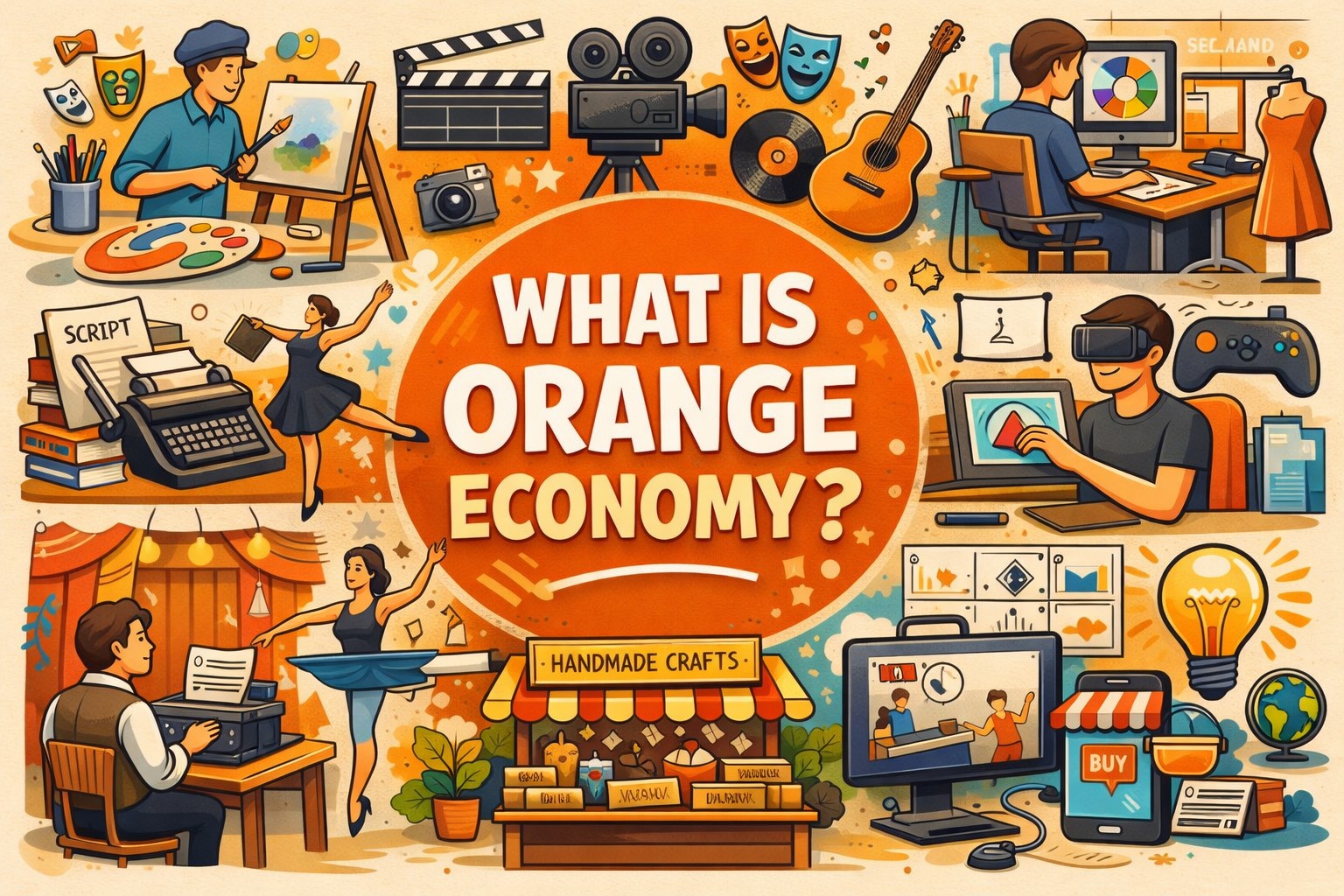
In the recently presented Union Budget, Finance Minister Nirmala Sitharaman spoke about the Orange Economy and the government’s intent to recognise it as a priority. Though this is the first time the phrase has been mentioned in the budget speech in India, it has been in vogue since 2013, when Felipe Buitrago Restrepo and Iván Duque Márquez from Colombia authored a book on it titled The Orange Economy: An Infinite Opportunity. But it is now that it has started gaining traction and everyone’s attention.