
The Calcutta Debating Circle is a hallowed institution that hosts well-attended debates annually in Kolkata. Apart from students and the youth, these debates are not missed by the Bhadralok, a term for the educated Bengali upper class and upper-middle-class elite that was a by-product of British rule, usually from the privileged castes. In 2026, the topic of the debate was “Does Hinduism need protection from Hindutva?” The debate featured panellists like Mani Shankar Aiyyar, Ashutosh, Mahua Moitra, and Ruchika Sharma speaking “FOR” the motion, and right-wing speakers like Swapan Das Gupta, Sai Deepak, Agnimitra Paul, and Sudhanshu Trivedi speaking “AGAINST” the motion. First up, seeing a topic that has Hindutva and Hinduism itself was a surprise at an event that prides itself on being very liberal. But what happened during the debate was even more surprising. One would have expected the audience in the Calcutta Debating Circle to cheer the speakers arguing for the motion and jeer those speaking against it. What happened was quite the opposite. The audience was overwhelmingly on the right-wing speakers’ side, and towards the end, it voted in favour of Swapan’s team. To the outside world, this was an indication that Kolkata was changing. For the TMC and its leadership, this should have been a wake-up call.
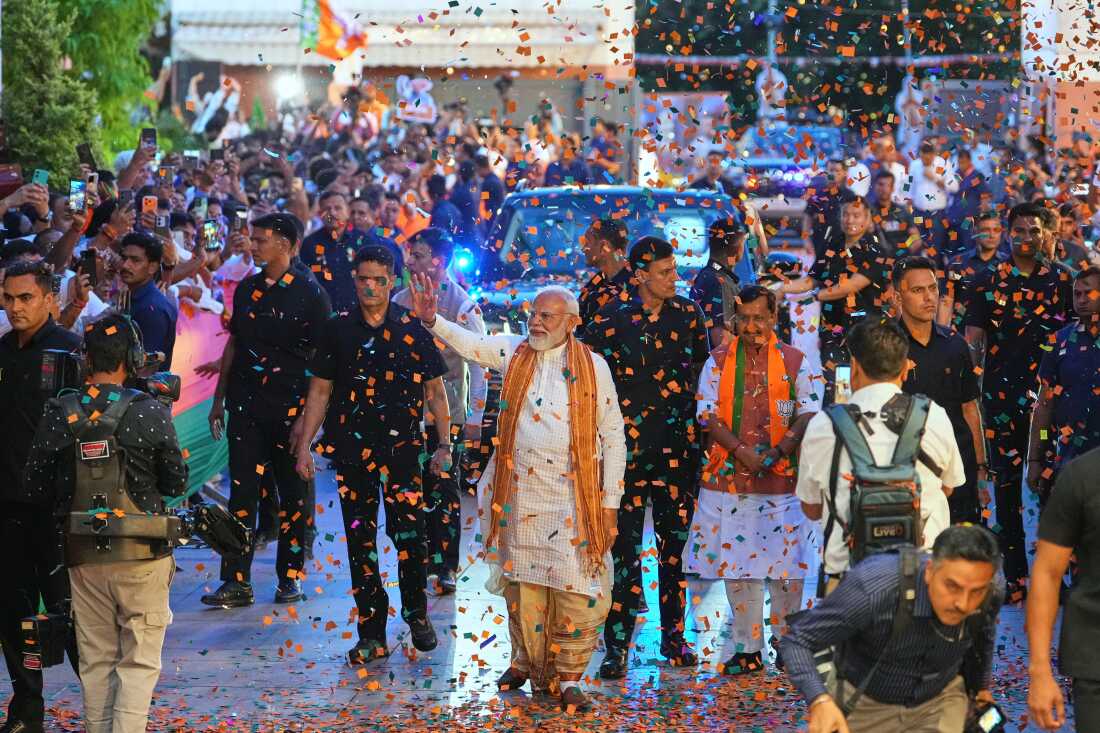
In another political earthquake, this time in the East, the BJP won Bengal for the first time. This is historic for more than one reason. For the BJP, winning Bengal marks the closure of its founder leader, Dr Shyama Prasad Mukherjee’s unfinished agenda. Mukherjee left Howrah in 1953 for Kashmir to protest against the special status given to Kashmir, but never returned. More recently, for the Jodi no. 1 of Indian politics – Modi and Shah – conquering Bengal was important to silence critics who kept saying that Bengal would not fall to the BJP’s divisive ideology. Therefore, this win for the BJP will go down in history as one of the most significant in the party’s history.
There are many takeaways from this Bengal election, and, as in the South, some are obvious while others are not.
1. With the unseating of the Left from Kerala by the Congress-led UDF, one would normally conclude that the Left’s influence in governance has been wiped out across all states. Not if you don’t consider what happened in WB. In Bengal, though the Left has not been in power for 15 years, the TMC is, in all respects, another avatar of the Left. So, only with the defeat of the TMC in West Bengal and the Left in Kerala can we conclude that the Left and its remnants have been uprooted from all the states of India today.
2. The three main wheels of the opposition INDI alliance, namely the TMC, the DMK and the Left, have been severely damaged today. With visible cracks in the alliance at the state level, the future of the opposition alliance is a big question mark.
3. A truly national party has got a chance to rule Bengal after almost 50 years. Let that sink in. This means the people of Bengal have been in a local bubble for five decades.
4. As expected, the liberal commentariat is already listing the reasons for Mamta’s rout as the SIR effect, the BJP’s Hindu-Muslim polarisation card, the Election Commission’s dubious role, and, of course, anti-incumbency. This completely misses the woods for the trees. One look at the magnitude of the win is enough to demolish all these reasons.
a. BJP won 207 out of 294 seats, which is more than a two-thirds majority. It is not a “just scraped through” win.
b. The BJP has a 5%+ vote share advantage over the TMC this time. In a bipolar race, this is significant.
c. In terms of seats, the gap is a staggering 127.
d. The incumbent Chief Minister lost her seat.
e. Out of the 35 ministers, 22 were defeated.
f. Among the top 20 seats with the maximum voter deletions due to SIR, the BJP won only 7 seats, and the TMC won 13. See detailed analysis of the SIR factor in this Hindustan Times article.
It is clear from the above points that the defeat has nothing to do with SIR or voter deletions. As we saw in Tamil Nadu, when people clamour for change and vote on that basis, conventional electoral wisdom and rationale don’t apply.
5. Continuing the above point, data also shows that the BJP has won seats across urban and rural areas, in Muslim-dominant seats, and in the Presidency area, all of which were considered tough for the BJP before the elections.
6. If anyone thinks the Modi factor doesn’t work in state elections, they are in for a reality check!
7. Social welfare schemes and doles to voters do not sustain voter loyalty forever. Development is a baseline requirement.
8. Similarly, being consistently antagonistic towards the Centre just because you are opposing it day in and day out is not a smart thing to do. The fate of AAP, BRS, DMK, and now TMC stands as testimony to this.
9. The trio of Dharmendra Pradhan, Bhupendra Yadav and Sunil Bansal, under the watchful direction of Amit Shah, has once again proved that they are the Dhurandhars of poll management on the ground.
10. Bengal offers the BJP significant hope for states like Punjab, Tamil Nadu and Kerala, where the party lacks a strong local face and an organisation as of now.
Therefore, it is an unprecedented mandate that the people have bestowed on the BJP. Expectations have already peaked from various quarters. It is important that the BJP puts the “double engine sarkar” formula to effective use, as they have done in states like UP, Assam, and Maharashtra, and transforms Bengal into Sonar Bangla as promised.
Postscript: In 2005, a young woman MP stood up in the Lok Sabha and took the then UPA government to the cleaners. Her issue? She demanded that the Centre implement a single ID for all citizens. She warned the government about illegal immigration from Bangladesh and spoke eloquently about the dangers of uncontrolled cross-border infiltration. The woman MP went by the name of Mamta Banerjee.