
It has been about 2 weeks since Donald Trump put out a post on his social media platform of a “Deal” with India. Since then, the contours of the so-called “Deal” have taken different shapes and forms. After the social media posts by Trump and Narendra Modi on 2nd Feb, a joint statement said it was only a “framework for an interim agreement”. This is important. There is no deal or final trade agreement yet. Only a framework has been reached—that too for an “interim” agreement. The final outcome, in the form of a Bilateral Trade Agreement (BTA), may still take a few months.
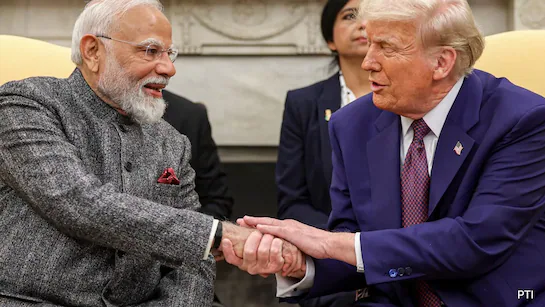
That said, this “framework for an interim agreement” is also significant, as it provides a big-picture view of the final agreement. It is also significant because it removes the fog of uncertainty and hostility that had been building between the US and India since May 2025. The principal opposition party, namely the Congress, has come out all guns blazing against the framework, calling it an absolute sellout.
Now, in a thriving and competitive democracy like India, it is only to be expected that the opposition will oppose the Government on any important issue. If you recall, when the UPA was in power, the BJP opposed the Civil Nuclear Deal tooth and nail, in conjunction with the Left parties. It was the BJP under the Vajpayee government that initiated the dialogue with the US on civil nuclear cooperation after the Pokhran tests. So, one shouldn’t attach too much importance to the “political” opposition, as it is famously said, “where you stand on a subject depends on where you sit (in the parliament – whether in the treasury benches or in opposition).”
It is, however, the myriad objections raised by some experts and commentators, calling the framework a surrender or a loss of face, that come as a baffling surprise. It is important to call out some of these, as they tend to paint a completely wrong picture! Let us look at some of the banal ones:
- “What is there to celebrate in the deal when the tariffs are at 18%? We used to have a tariff of only 2-3%!” Well, those were Pre-Trump days when the US did not use tariffs to correct its trade imbalance. Almost all countries enjoyed nil or low tariffs. In this term of Trump, even America’s closest allies were slapped with high tariffs initially to get them to strike a deal with the US. After the trade deals, the UK has a tariff of 10%, the EU has a tariff of 15%, and Japan has a tariff of 15%. Among India’s competitors, China has tariffs of 20% or above, Vietnam has 20%, Bangladesh has 19%, and so on. Before this agreement, the reciprocal tariff was pegged at 25%, which would have made us less competitive with China, Vietnam, Bangladesh, and others. Therefore, what we have to be happy or satisfied with is that we are not in an uncompetitive situation.
Also, as I understand it, there is no uniform 18% tariff on all items exported from India to the US. Individual tariffs will apply based on the applicable customs HSN code, capped at 18%. There is also a narrative that leads people to believe that a tariff is something the Indian government bears. A tariff is levied by US customs upon import, thereby increasing the landed cost for the US buyer. Ultimately, that cost will be passed on to the US consumer. If tariffs are imposed exclusively on India, it will make our goods uncompetitive and affect Indian traders. If our tariffs are the same as or lower than our competitors’, they do not affect us as a country.
It is another matter that, sooner or later, tariffs will pinch the pockets of US consumers as their costs rise, and will therefore come back to hurt the economy. Tariffs need to be considered from both the seller’s and the consumer’s perspectives, not just the sellers’.
- “Oh, we have agreed to open up India to all industrial goods, which will kill our domestic industry.” Again, a fallacious argument. By reducing or eliminating the basic import duty on these industrial goods, India has made them more affordable and competitive for the Indian industry. This will open the Indian market to FDI and create opportunities for the Indian industry to collaborate. After the 1991 reforms, when the Indian market was fully opened up across many sectors, we have seen the Indian economy and industry thrive and grow ever since.
Also, throughout, members of the intelligentsia and trade economists have argued that we have been raising import duties to protect Indian industry. Instead, they have advocated cutting tariffs and opening up to give customers a choice, while Indian manufacturers step up their competitiveness. The commentariat needs to be consistent in its arguments. Either it should advocate higher duties and demand protection for the industry, or it should ask for lower duties and open up the market. It can’t be both, depending on what the Modi government does.
- “Modi Sarkar has opened up agriculture to the US. The deal will kill Indian farmers!” – Both India and the US have clarified that, within agriculture, the red lines, such as Paddy, Wheat, Pulses, and Dairy, have not been crossed. In farming, better access has been provided for less sensitive items such as tree nuts (almonds/walnuts), fresh and processed fruits, soybean oil, wine and spirits, and animal feed inputs (dried distillers’ grains with solubles [DDGs] and red sorghum). Where is the sell-out here? Aren’t we already importing almonds and walnuts from the US? Aren’t we buying apples, kiwis, and other fruits from the US and other countries? India produces only a very small fraction of the dry fruits and other fruits consumed today, so these have to be imported in any case. When tariffs are reduced, goods become more affordable for Indian consumers.
- “India has committed to buy goods worth $500 billion from the US. How can we buy so much from the US when our purchases are only US$45 billion today? Thankfully, the US, in its Ver 2 of the fact sheet, clarified that it is not a commitment but only an expression of intent. When our commerce minister said so on the 1st day, it was not believed. Now, the question is how India can buy goods for US$500 bn. First, the intent is not to purchase in the 1st year; it is over 5 years. Today, purchases may be less than US$50 bn. But it is clear that as trade relations improve and become easier, mutual trade will increase exponentially.”
In bilateral negotiations, it is often wise to engage in some non-binding ‘kite flying’ to gain points in your favour. This is a common technique in business. Here, it is pertinent to recount how the Indian software industry took flight in 1991 with the announcement of the STPI policy. The story goes like this. N. Vittal, then Secretary in the Ministry of Electronics, was discussing the support required by the IT industry to increase software exports. The industry demanded a 10-year tax holiday. The finance ministry responded that if software exports increased from $100 million that year to $400 million in one year, the government would accede to the request for a tax holiday. The industry was extremely nervous about committing to a fourfold increase in exports in one year. That’s when Vittal schooled the industry representatives with a Birbal story, which became a key point in India’s software growth story.
One day, Akbar, incensed by Birbal for some reason, ordered him to be beheaded. Birbal pleaded for a reprieve of one year and, if accepted, promised Akbar that he would make the emperor’s pet horse fly. Akbar agreed to Birbal’s request and granted him a year’s reprieve. Birbal’s cohorts wanted to know what this strange promise was about, which helped him convince Akbar to grant him a year’s reprieve. With his tongue firmly in cheek, Birbal replied, “Who knows what will happen after one year? I may die, the horse may die, or the King may die. Or maybe, the horse may fly.” Vittal wanted the NASSCOM team to approach the commitment like Birbal and bite the bullet by accepting the $400 million software exports target within one year. Thanks to this crucial governmental intervention, the horse did fly, perhaps not in 1991 but a few years later. However, the IT industry got its ten-year reprieve from taxes.
Therefore, this US$500bn purchase could be akin to “The Horse can fly”. As long as there is no contractual barrier, we must believe that a horse can fly and work towards it. One should remember that the billions of dollars in investments committed by IT biggies like Google and Microsoft to set up data centres for their GCCs require capital investments in India by Indian entities, which may not be fully indigenous companies. Also, it is not the Indian government that will do all the “intended” purchases, anyway.
- “The US has arm-twisted India into buying cheap Russian oil, and therefore we have lost our strategic economy.” In the first place, the deal came through because we committed to reducing purchases of Russian oil. It is a fact that by agreeing to stop purchasing oil from Russia, we have been arm-twisted by the US to some extent. But then, here’s the reality check. Before the war in Ukraine, our purchases of oil from Russia were less than 5%. We started buying only because other sources were becoming more expensive due to the war, and Russia was willing to offer us discounts. There is no commitment from our side to Russia that we will buy oil from them forever.
It is in our best interests to have diversified energy sources as long as our costs remain low. This is both a matter of safeguarding our national interests and strategic autonomy. Getting the 25% penal tariff off the back and reducing the reciprocal tariffs down from 25% to 18% paves the way for increased trade in sectors like Garments, Gems, Shrimps, Rice, etc. It not only saves jobs but also creates jobs, and hence, it is a matter of national interest that deserves consideration. At the end of the day, it is a question of doing a cost-benefit analysis of both options and making a call. I am sure that the government would have done the math here before accepting this.
There is also a need to pay close attention to detail in the statements issued. The clause on Russian oil is not part of the trade agreement framework. Trump, through an executive order, has rescinded the 25% punitive tariff on the agreement under which India was to reduce its oil purchases from Russia gradually. This process has already begun, as evidenced by the recent decline in Russian oil purchases. However, India has not made any official statement on this. Russia has also said it has not been informed of any such move by India so far. In my opinion, India’s noncommittal stance is strategic and intended to buy time. Hectic parleys are underway between Ukraine and Russia, with the US in between, to halt the Ukraine war. If that happens, the purchase of Russian oil becomes a non-issue. Also, as the former foreign secretary Nirupama Rao rightly opines, strategic autonomy cannot be synonymous with equidistance or rigid neutrality, but with flexibility and pragmatism.
- “Bangladesh got a better deal than us, as the US has accepted 0% tariff on textile exports from Bangladesh if Bangladesh imports cotton from the US.” First of all, as the commerce minister clarified, this option is available to India as well. But the key question is whether it makes commercial sense for Bangladesh to import expensive US cotton, incur higher freight costs and longer lead times, and export garments to the US at much lower margins. Some exporters could take the US route to source cotton for certain higher-end garment businesses, which could absorb higher costs. Otherwise, it is better for them to source cheaper cotton from India, as they are doing today, and have it shipped by rail or road with much shorter lead times. In this case, they could also manage with much lower inventory and reduce working capital costs.
Having said all this, the benefits of a deal would accrue only if private-sector players work diligently to take advantage of the concessions provided. There are always a bunch of enterprising business groups who put their sharp minds to understanding the finer points in these trade agreements. They then work to either expand their existing capacities or invest in new areas that open up opportunities for them, thanks to concessions in the trade agreement. Therefore, the success of these trade deals needs to be viewed in the context of how far private-sector players move forward in leveraging these agreements.
An agreement involves two sides. A well-negotiated deal is one in which both sides leave the table feeling they have won. That’s what this is.